


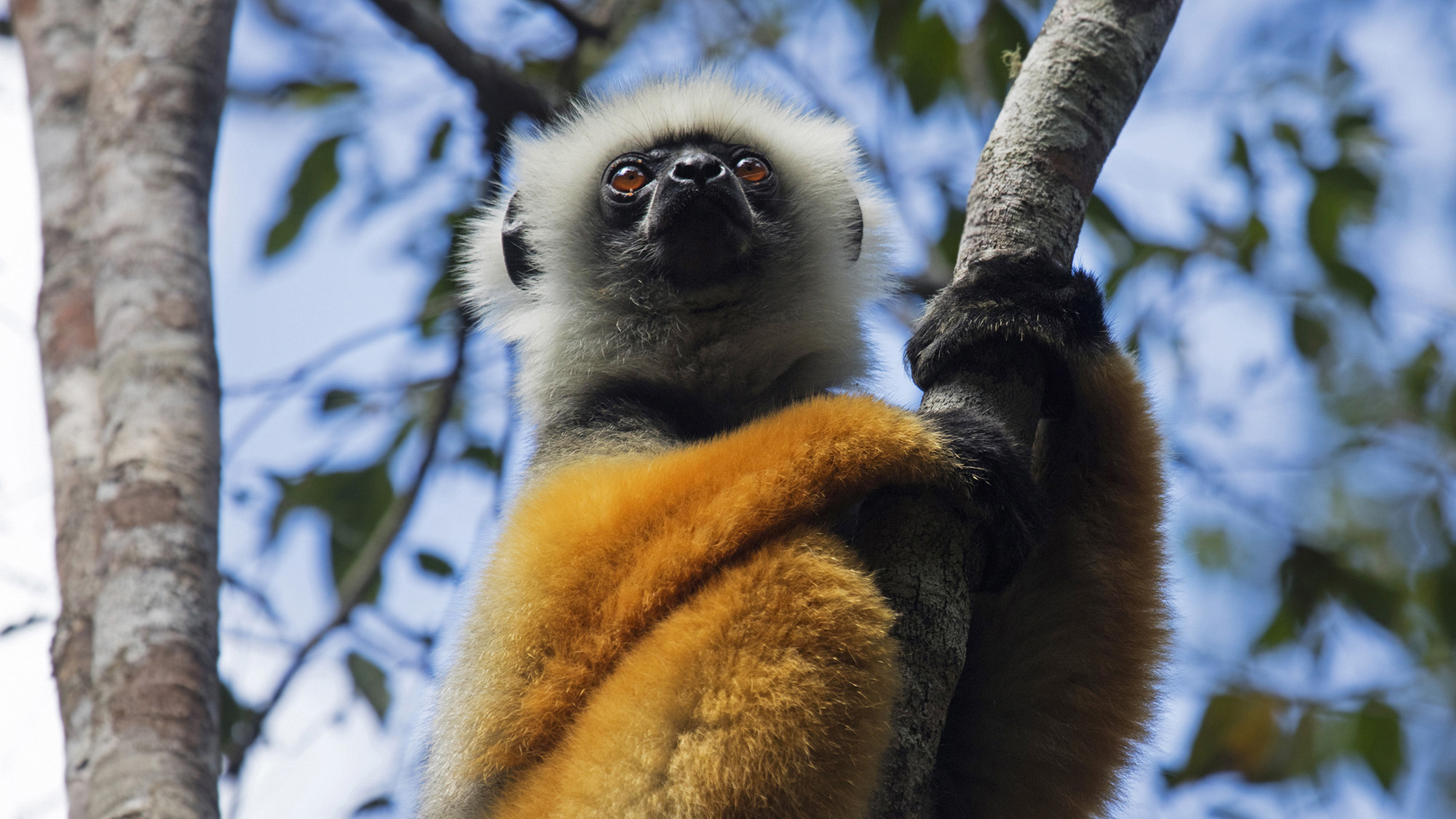
Many of Madagascar’s charismatic lemurs are in big trouble. Slash and burn agriculture has destroyed their habitat and made most of its subspecies vulnerable to extinction. Now, critically endangered diademed sifaka lemurs (Propithecus diadema) are being attacked by another vulnerable species, a cat-like carnivore called the fosa (Crytoprocta ferox, also spelled fossa).
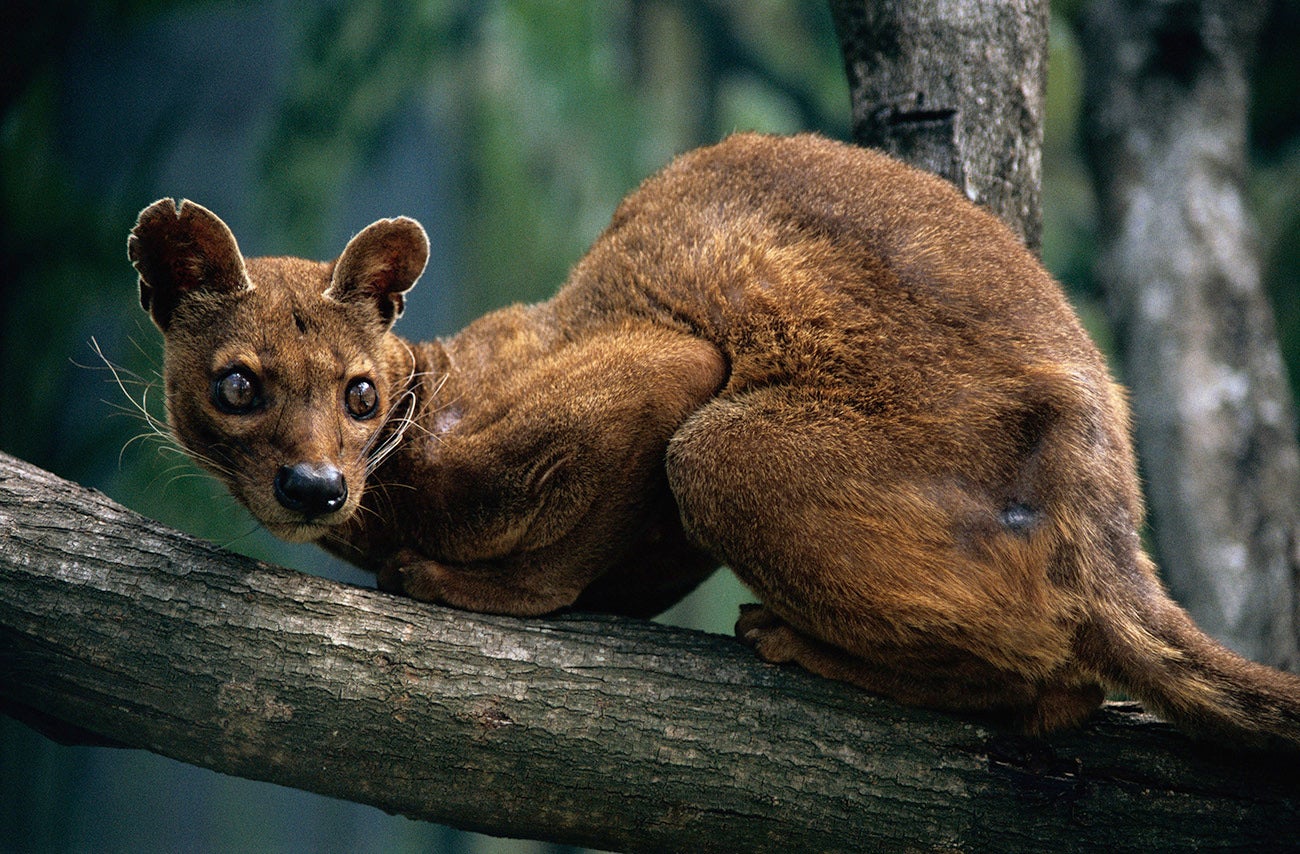
A study published April 9 in the journal Ecology and Evolution details very rare observations of how diademed sifaka lemurs at Madagascar’s Betampona Strict Nature Reserve have been attacked by fosas. Fosas are reddish brown animals with slender bodies and long tails. They are excellent climbers and are often compared to cougars. However, they are actually part of the weasel family.
The International Union for Conservation of Nature and Natural Resources also categorizes the fosa as vulnerable and at risk of extinction. Nearly all of the lemurs that fosas have now been observed eating are also at risk of extinction. The fosas also prey on birds and rodents.
The impact of this new predation by the fosa combined with low reproductive rates and a potentially high inbreeding in the lemur population of Betampona could affect the survival of this species at this site. Betampona is Madagascar’s first protected reserve. It includes roughly 5,400 acres of rainforest on the island’s east coast, surrounded by agricultural land. This makes it difficult for the lemurs and other animals in the reserve to find other eligible animals to mate with.
[Related: Giant beasts once roamed Madagascar. What happened to them?]
In this new study, a team from Washington University in St. Louis and the University of Antananarivo in Madagascar came across one fosa preying on diademed sifaka lemur during the team’s daily behavioral observations.
“What we saw was very rare. There are other small carnivores in Madagascar, but they are not big enough to be able to prey upon an adult diademed sifaka [lemur] because they are among the biggest lemurs,” study co-author and Washington University in St. Louis biological anthropologist Giovanna Bonadonna said in a statement. “There are not so many predators that could actually get them.”
The team found that this dynamic can be particularly complex when the predation occurs in an isolated or poor-quality habitat without enough resources to go around. Also, fosas are rarely caught in the act since they are stealthy hunters. Previous studies could only gleam what they eat by examining the bones and other evidence left behind in their droppings.
“We noticed that a female diademed sifaka [lemur] that we were following after the first attack didn’t run away very far,” study co-author and University of Antananarivo PhD student Onja Ramilijaona said in a statement. “Instead she stayed still and remained vigilant, looking at the fosa.”
Ramilijaona also documented the remains of another lemur that they presumed was killed by a fosa. Hair was scattered around the site and its abdominal contents were found near several bones. The tree branches nearby also indicated signs of a struggle between animals. The study describes other instances over 19 months of observations when the fosa appeared to stalk lemurs, but did not manage to take one of them down.
[Related: Dams are hurting this enigmatic Australian species.]
While the Betampona reserve itself is protected, the forest’s relatively small size and isolation from other eligible mates can make it difficult for animals like the diademed sifaka lemurs to continue to breed and survive there.
“This population of diademed sifakas is already in bad shape,” Bonadonna said. “There is a huge predation pressure that was underestimated until we did this behavioral study. We were able to highlight inbreeding and other factors that may be behind the fact that this population cannot thrive at Betampona.”
Bonadonna stresses that fosas are not “the bad guy.” They are also in need of conservation and face threats from habitat loss, competition for food resources, and a bad reputation among humans who can often consider them pests. The study highlights just how difficult conservation can be. Human activities and behaviors can lead to changes within ecosystems and cascading effects on at-risk species, such as more inbreeding and lack of genetic diversity.
“Despite the effort to conserve one species, it’s really the ecosystem and the balance of that ecosystem that is at stake once the habitat is compromised,” said Bonadonna.
The post Critically endangered lemur attacked by vulnerable fosa in Madagascar appeared first on Popular Science.
Articles may contain affiliate links which enable us to share in the revenue of any purchases made.
