Whatfinger Daily
    What's Hot

    Stocks risk a stir-up in last trading push of the year. Where to put your money.

    December 14, 2025

    High-end car sales sink in China as its economy slows, taking a toll on European automakers

    December 14, 2025

    Gunmen kill at least 11 people in attack on Hanukkah celebration on Sydney’s Bondi Beach

    December 14, 2025
    Facebook Twitter Instagram
    Trending
    • Stocks risk a stir-up in last trading push of the year. Where to put your money.
    • High-end car sales sink in China as its economy slows, taking a toll on European automakers
    • Gunmen kill at least 11 people in attack on Hanukkah celebration on Sydney’s Bondi Beach
    • Police arrest person of interest in Brown University shooting that killed 2, wounded 9
    • ‘Very alarming’: Laura Loomer slams Kash Patel for not calling Sydney’s Bondi Beach attack ‘Islamic terrorism’
    • BREAKING HUGE: PRISON OFFICIALS WON’T RECOGNIZE PRESIDENT TRUMP’S PARDON – LAUGH AT REQUEST AND REFUSE TO RELEASE TINA PETERS
    • There’s Something About A Bakery Body Slam In Whole Foods That Reminds Us That Christmas Is Around The Corner
    • A Hanukkah Lesson for America: Without Our Roots, the Tree of Liberty Dies
    • World News Vids
    • Whatfinger News
    • Goldco Special Offer
    • Donate
    Whatfinger DailyWhatfinger Daily
    Subscribe
    Sunday, December 14
    • Home
    • Whatfinger
    • Breaking
    • Polls
    • Fast Clips
    • Sports
    • Humor
    • Entertainment
    • Business
    • Military
    • Sci-Tech
    • Daily List
    • Videos
    • Debt
    • About
    Whatfinger Daily
    Home»Science

    Take a look inside 13,000 animals–no scalpel required

    March 6, 2024
    Share
    Facebook Twitter LinkedIn Pinterest Email
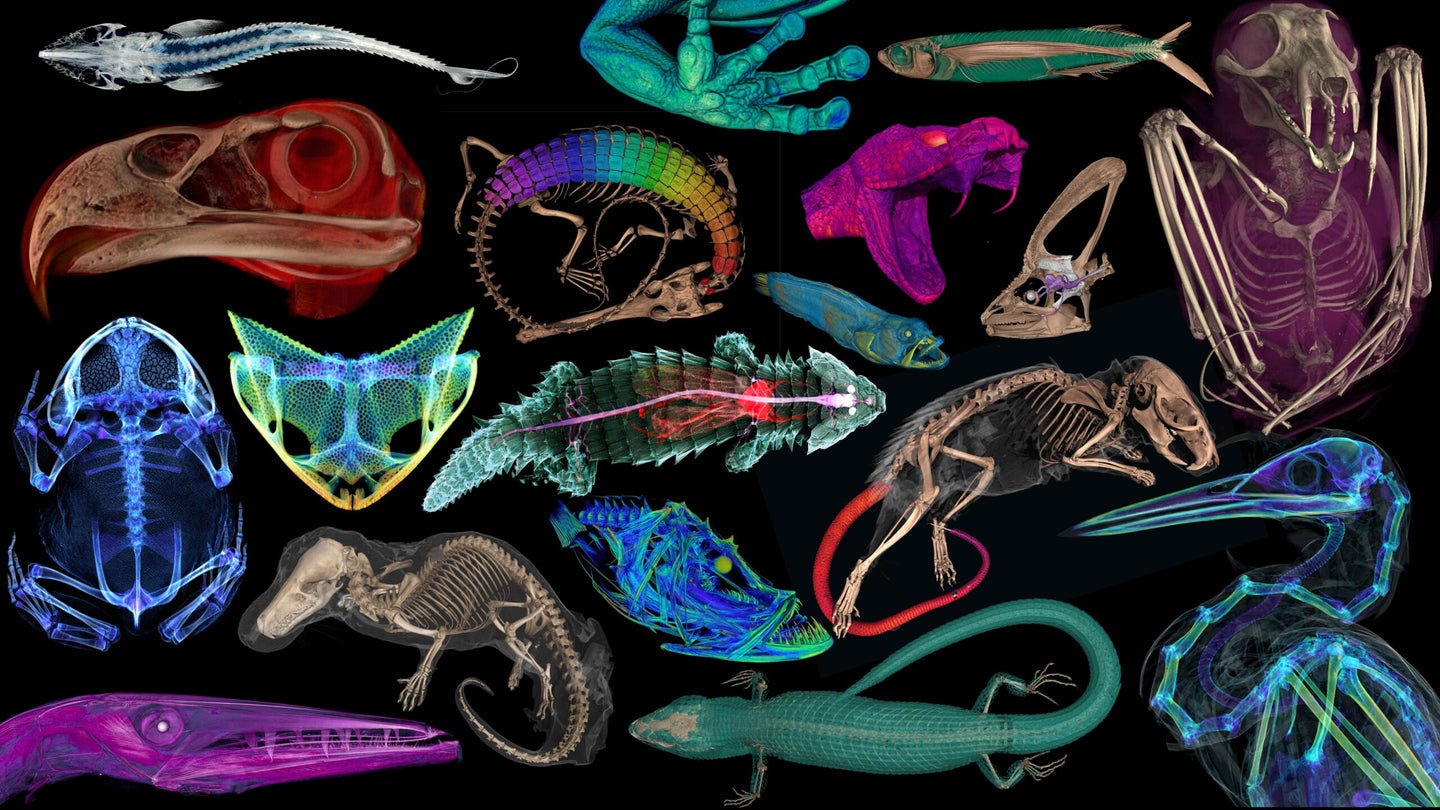
    scans of the anatomy of different animals
    The openVertebrate project was a five-year initiative funded by the National Science Foundation to make 3D models of museum specimens freely available to scientists, students, teachers and the public. openVertebrate

    If dissecting a frog in biology class had you begging to be sent home, new 3D scans of thousands of vertebrate species are here to help by letting you peek at animal insides without the mess. The newly completed openVertebrate (oVert) project took five years and brought together 18 natural history institutions to create the free online museum, showing the anatomy and physiology of over 13,000 specimens. A summary of the work was published March 6 in the journal BioScience. 

    From 2017 to 2023, oVert project members took detailed CT scans of more than half the genera of all amphibians, reptiles, fishes, and mammals. The scanners used high-energy X-rays to look past the organism’s scales, fur, or skin to view the dense bone structure beneath. Scientists stained some of the specimens with a temporary contrast-enhancing solution that allows the team to visualize their soft tissues, including muscle, skin, and other organs. 

    “Museums are constantly engaged in a balancing act,” David Blackburn, principal investigator of the oVert project and curator of herpetology at the Florida Museum, said in a statement. “You want to protect specimens, but you also want to have people use them. oVert is a way of reducing the wear and tear on samples while also increasing access, and it’s the next logical step in the mission of museum collections.”

    Take a look at some of the incredible scans below. It will be like stepping back into high school biology, without the scalpel, Bunsen burners, or safety glasses.  

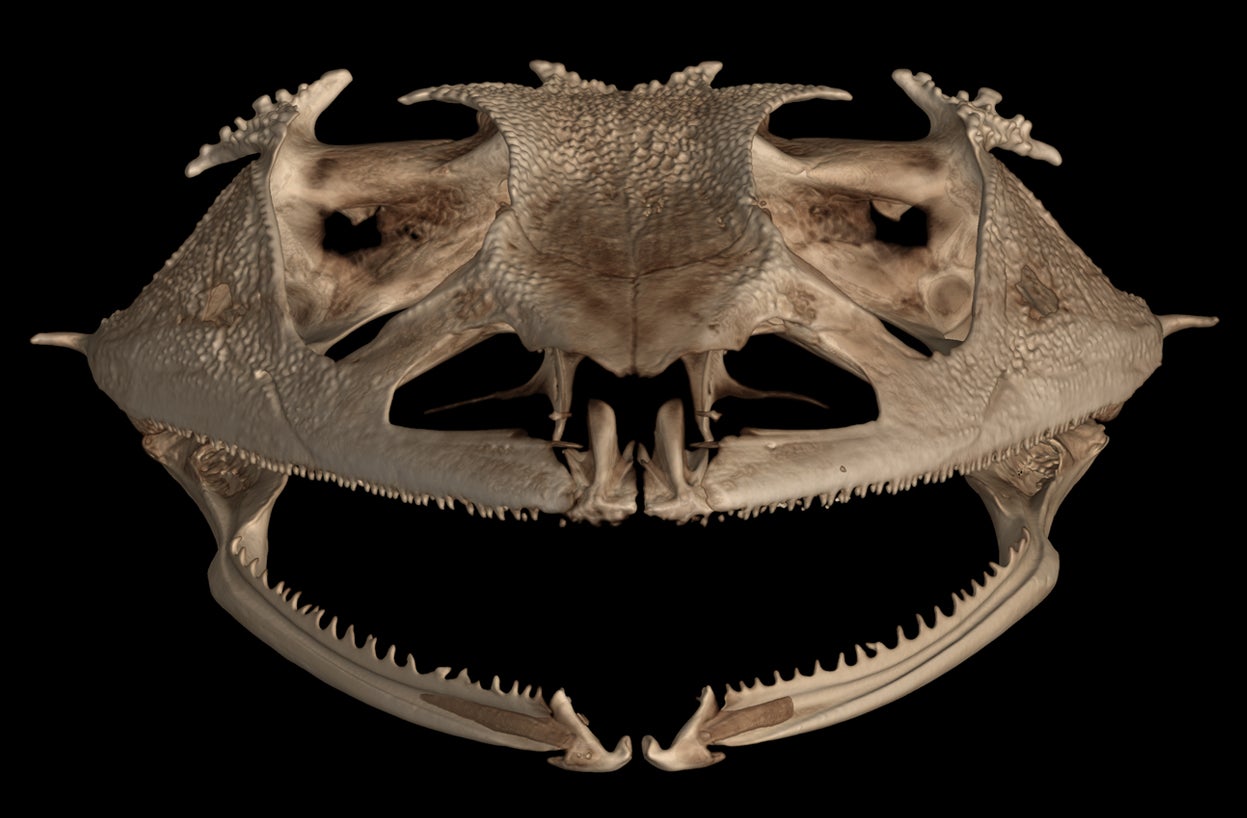
    a frog skull
    An analysis of oVert specimens revealed that frogs have lost their teeth over 20 times throughout their evolutionary history, more than any other vertebrate group. Image: openVertebrate
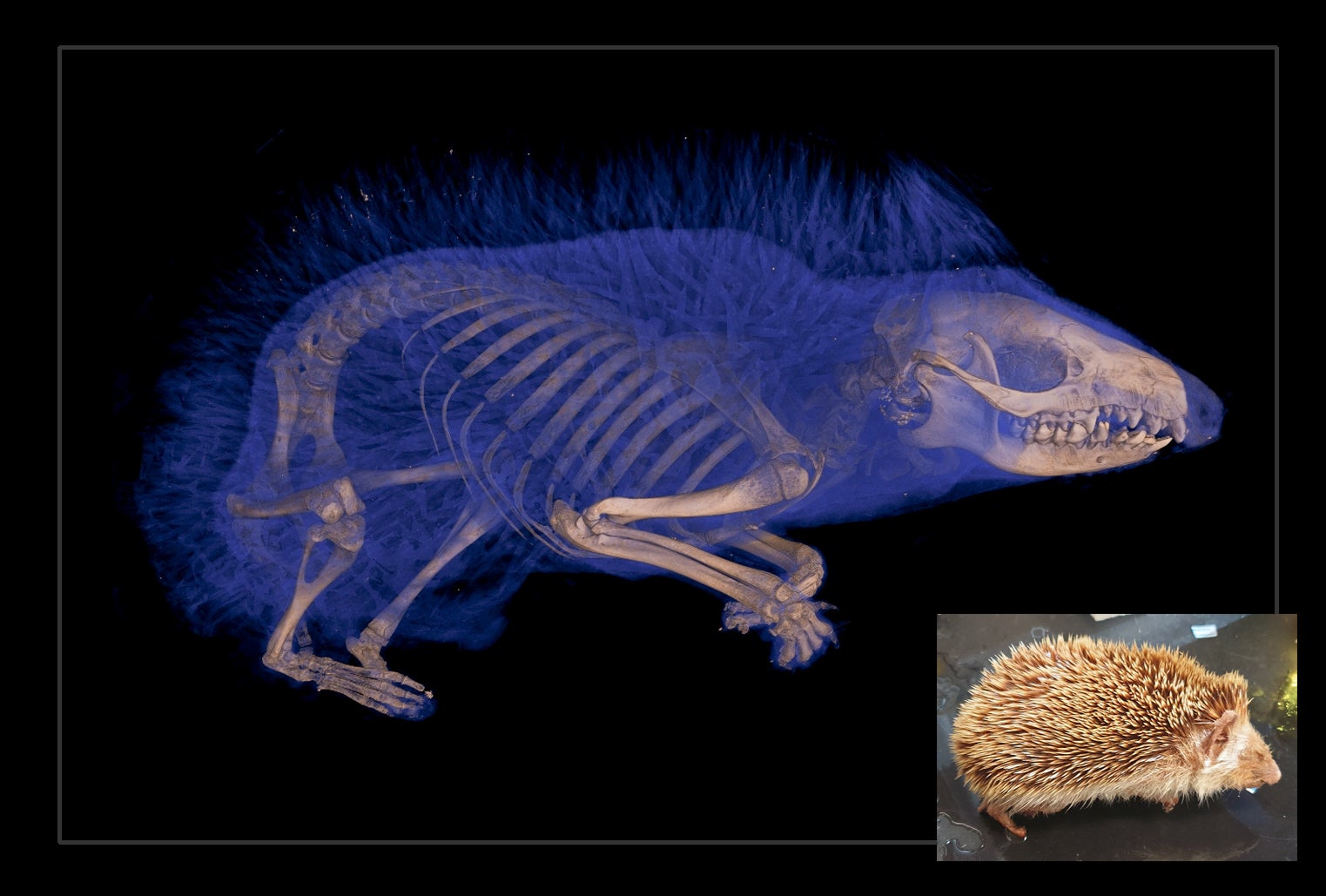
    the bone structure of a hedgehog
    With CT scanning, scientists can study a specimen’s internal anatomy without the need for dissection. Image: openVertebrate
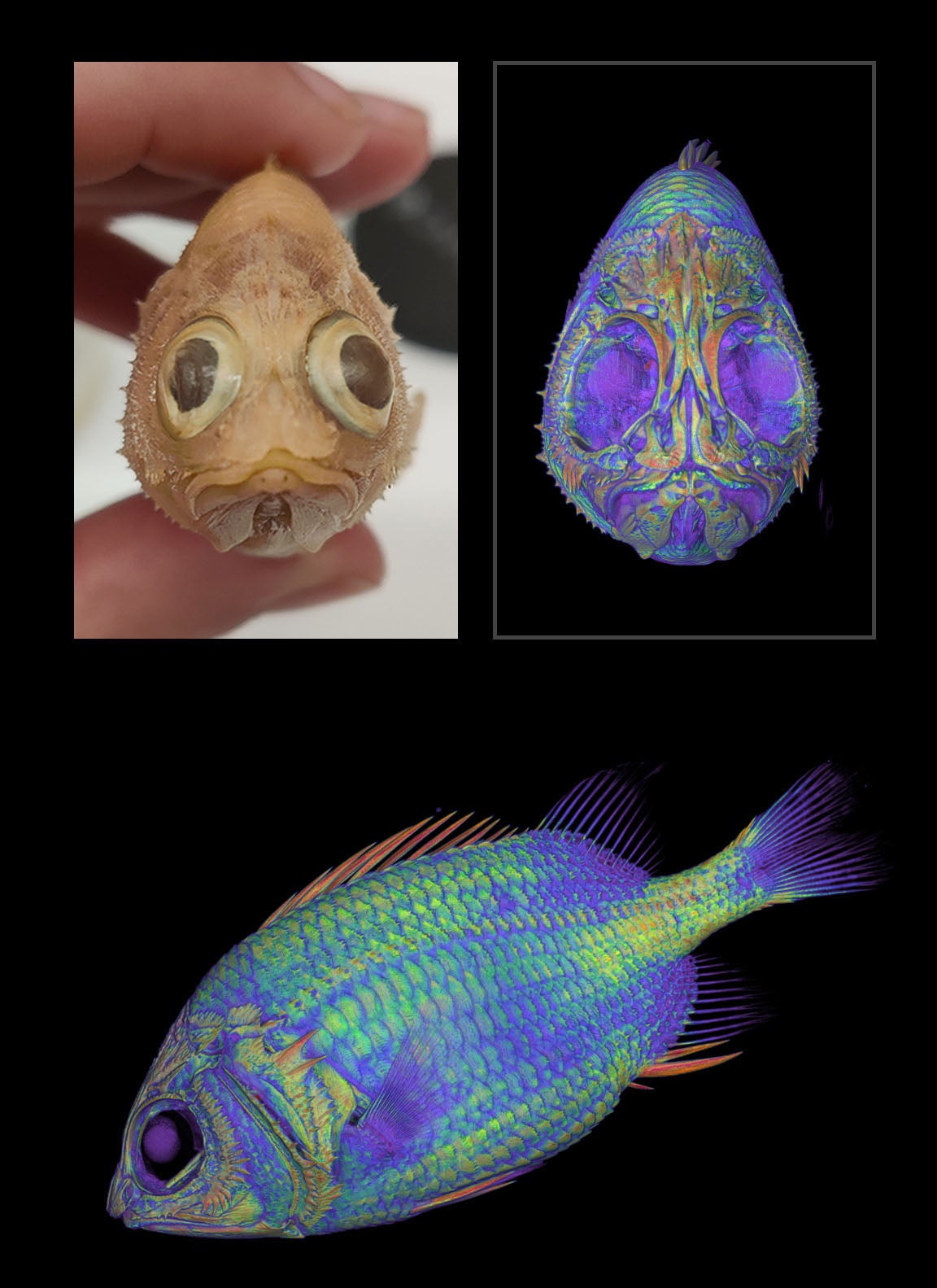
    a scan of fish scales and face
    The primary goal behind the oVert project was to image as great a breadth of diversity across the vertebrate tree of life as possible, including fish, reptiles, amphibians, birds and mammals. Image: openVertebrate
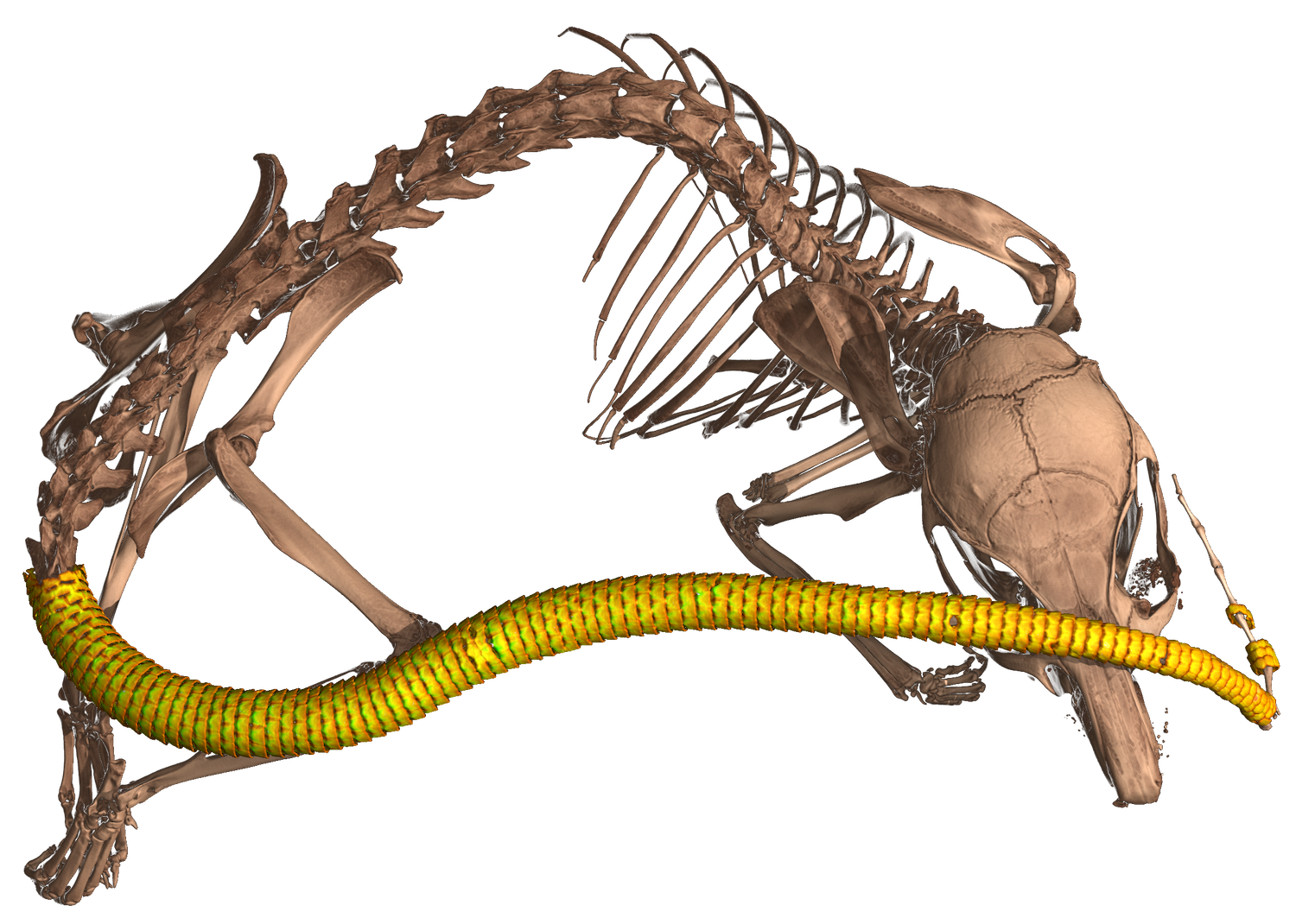
    the skeleton of a mouse
    Osteoderms have evolved multiple times in different animal groups, and their presence in spiny mice further indicates the genetic pathways needed to produce them are highly conserved among vertebrates. Image: openVertebrate
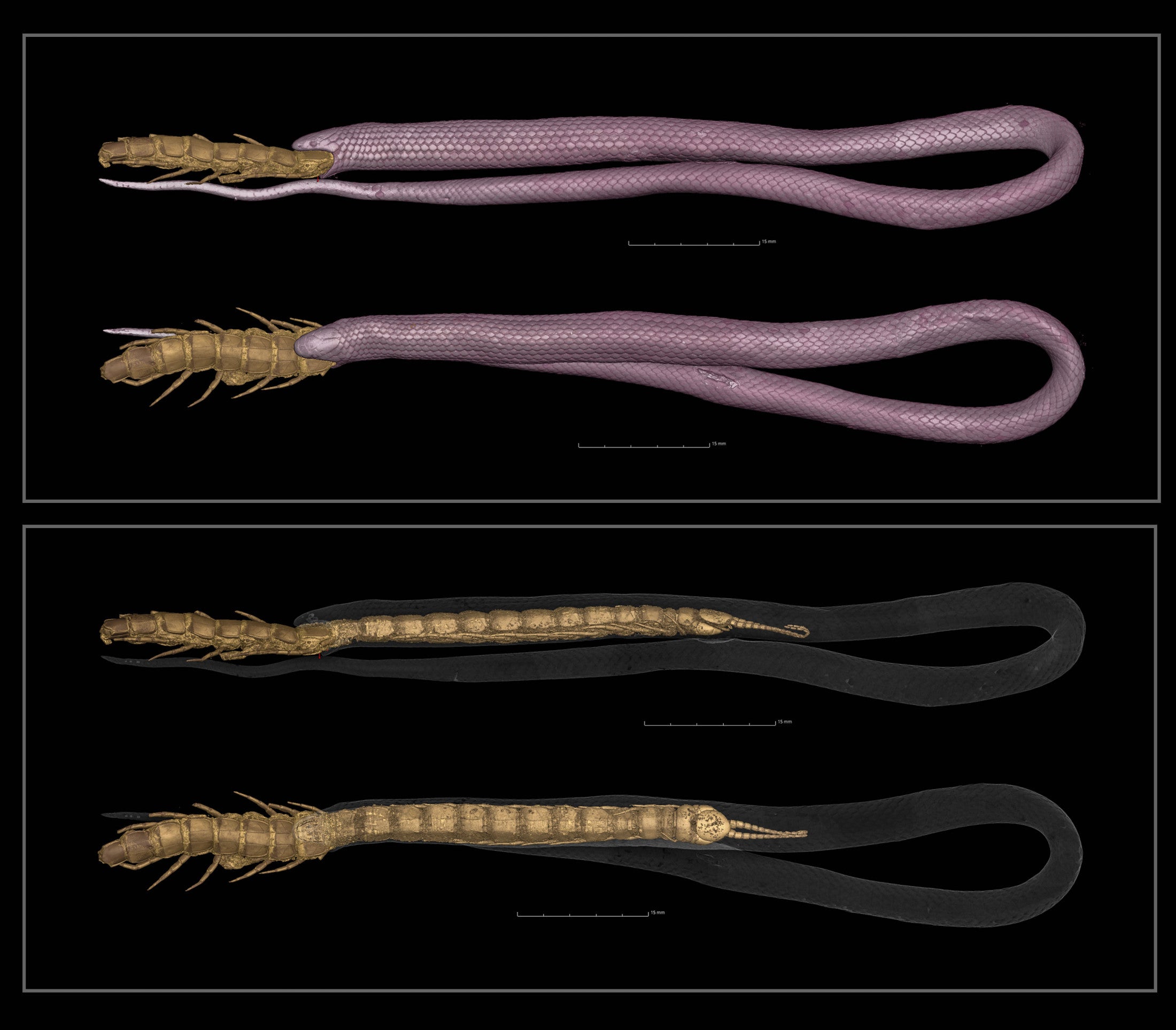
    a snake eating a centipede
    Researchers performed a digital dissection of North America’s rarest snake when a specimen was found that had died while trying to eat a centipede. Image: openVertebrate
    a bat skeleton
    The preserved specimen of a black bellied fruit bat compared to its CT scan. Image: openVertebrate.
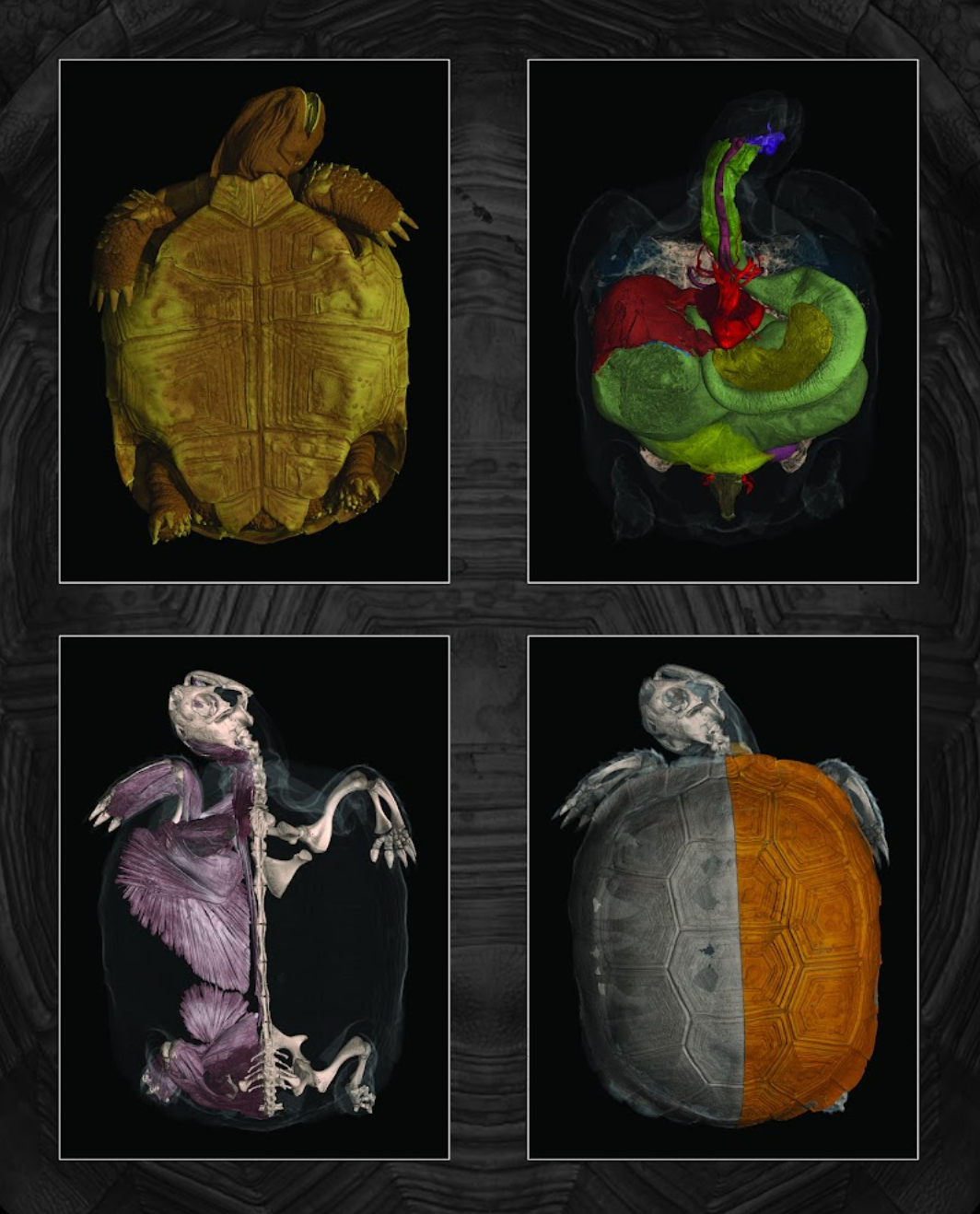
    a tortoise internal anatomy, including its skeleton and organs
    The gopher tortoise’s internal anatomy. The colorful regions show soft tissues, including organs. Image: openVertebrate.
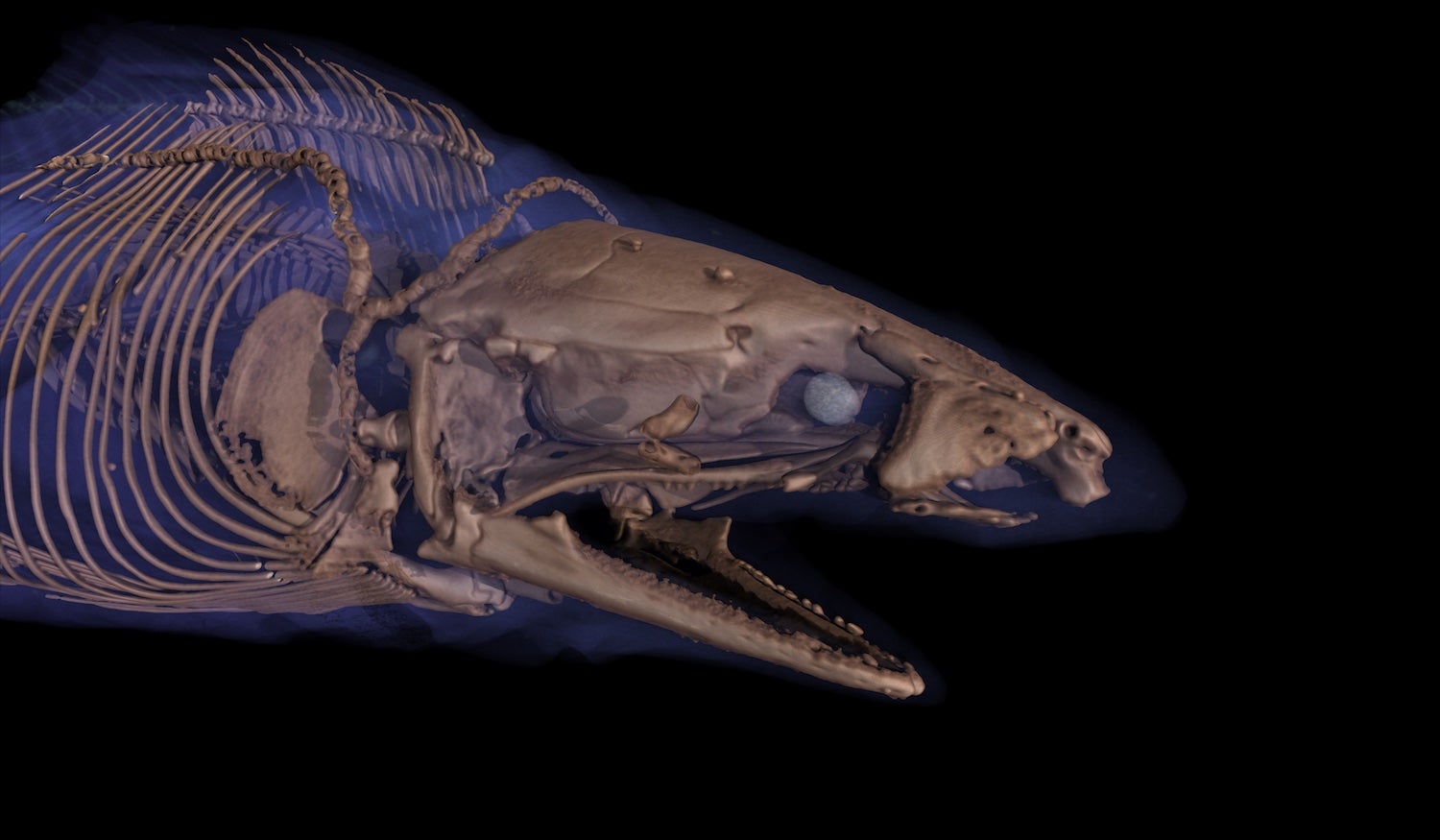
    an eel skeleton
    Caralophia loxochila, or the Slantlip eel swims in the shallow waters of the western Atlantic Ocean, near Brazil, the Bahamas, and the Florida Keys. Image: openVertebrate.
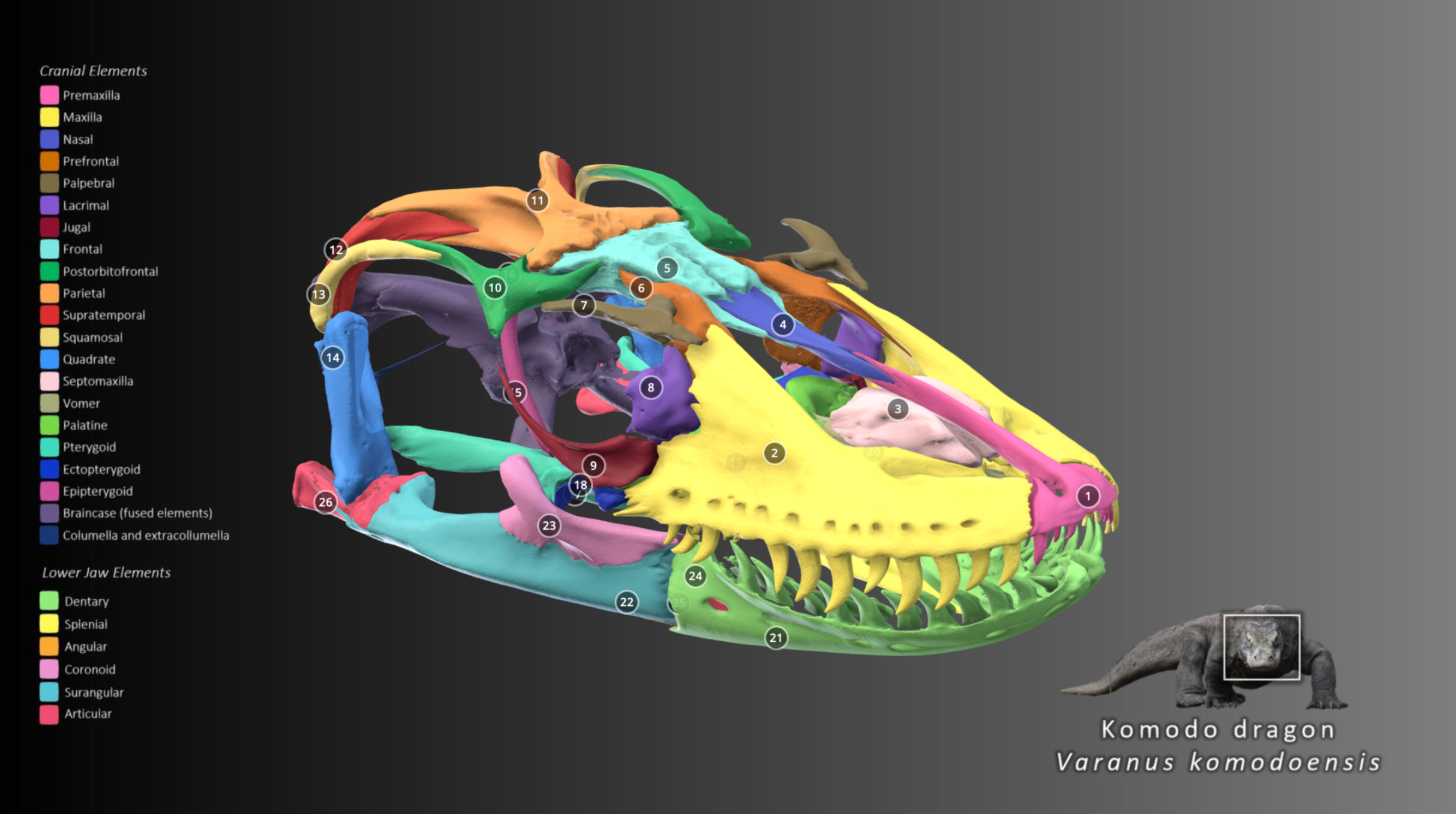
    a model of a komodo dragon's skull showing different parts
    A model of a Komodo dragon’s skull. Bites from their powerful jaws can be fatal to humans. Image: openVertebrate.
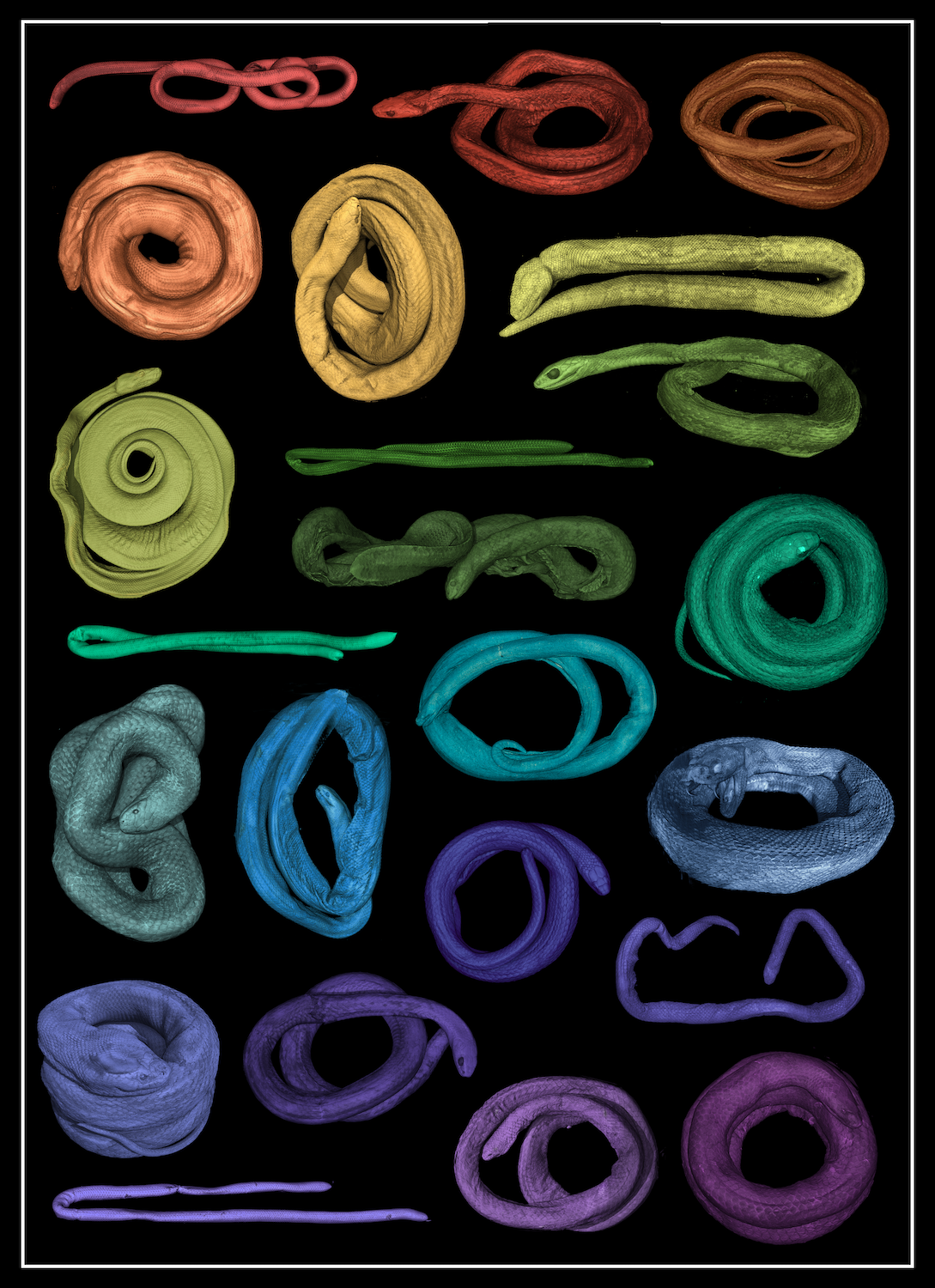
    a rainbow of snake scans
    Multiple snake species that were temporarily stained with an iodine solution showing their soft tissues before being scanned. Image: openVertebrate.


    Check out more of the scans here.

    The post Take a look inside 13,000 animals–no scalpel required appeared first on Popular Science.

    Articles may contain affiliate links which enable us to share in the revenue of any purchases made.

    Michael

    Keep Reading

    Young moths hiss at predators 

    Trump Officials Keep Comparing the U.S.’s Vaccine Schedule to Denmark’s. They’re Missing the Point

    Man with metal detector stumbles on perplexing Viking Age grave

    These earbuds just won one of our top innovation awards and they’re on sale for a limited time

    Save up to 56% ARZOPA’s digital picture frames and portable gaming monitors in time for the holidays

    Teeny tiny orange toadlet found in Brazil

    Comments are closed.

    Whatfinger News: More news daily than any other news site on Earth. . All sources, all on one page! BAM! There can be ONLY one… CLICK BELOW
    Whatfinger Daily
    • Home
    • Politics
    • Business-Money
    • Sports
    • Buy Now
    Whatfinger Daily is published by Whatfinger News

    Type above and press Enter to search. Press Esc to cancel.